Security & GDPR
Make face scan easier to approve, explain and implement
Justface is built on active consent, alternative access, EU hosting, secure data handling, and clear documentation – so you can proactively address questions regarding biometrics, GDPR, and responsible face scan usage.

For those seeking approval for the solution
Make face scan easier to approve internally
When introducing face scan, the solution needs to do more than just work in practice. It also needs to be approved, explained, and documented for management, IT, compliance, and the people using it every day.
With Justface, you get a solid foundation to take the discussion further internally – from questions about biometric data and consent to alternative access, EU hosting, and responsible AI use.
Further down the page, you'll find brief answers to the most common questions about face scan, GDPR, and responsible usage.

Trust from the start
Build trust early in the decision process
Justface brings together the essential information so you can demonstrate how face scan is handled – without making the conversation heavy or technical.
Access control, not surveillance
Explain AI as an access feature
AI and face scan can easily sound technical or sensitive. That's why it's important that the purpose is clear: In Justface, face scan is used for access – so you can show what the technology is used for, and what it is not used for.
What face scan is used for
- Verifying whether a registered user has access
- Access at a specific access point
- Users who have actively given consent
- A simpler and more reliable access experience
What Justface is not
- Continuous monitoring of individuals
- Surveillance of areas
- A requirement for users who do not want face scan
Consent
Make consent easy to obtain and explain
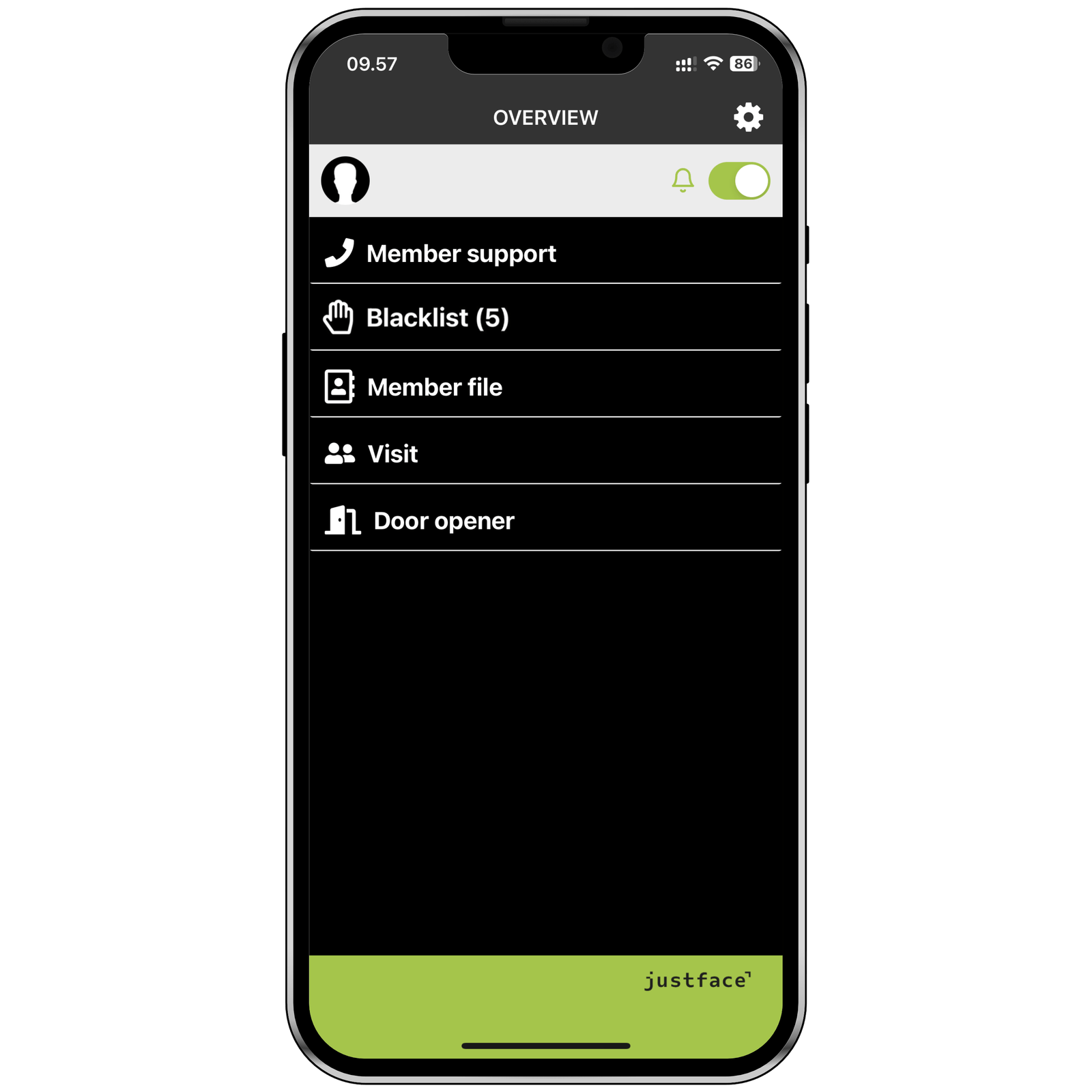
Consent is often one of the first questions raised when a business considers face scan. Justface makes it clear how users are informed, actively opt in, and provide consent before face scan is activated.
For you, this means less explanation work, fewer concerns, and a more professional user onboarding process – without complicating things.
Alternative access
Give users a choice – and make implementation easier to approve
A face scan solution is easier to introduce when it isn't perceived as a requirement. Justface supports alternative access, allowing you to offer a modern access experience without forcing all users into the same solution.
This provides greater implementation flexibility and a stronger argument when talking to management, IT, compliance, and users.

The user's choice
Face scan is an option – not an ultimatum.
Data and documentation
Get a handle on data, documentation, and responsibility from the start
Justface is developed with a focus on data protection, transparency and a clear purpose: providing access. Biometric data is processed with security as the baseline, data is hosted within the EU, and the solution works with encryption, access control and documented processes.
For you, this means a clearer foundation for discussing compliance and GDPR – from purposes and data types to security measures, user rights, deletion and data processing agreements.
- Data hosted in the EU
- Encryption and access control
- Documented processes
- Data processing agreement and clear division of responsibilities

Read more
Solution, process and documentation
Explore the pages that show the solution in practice, explain registration and consent, and feature relevant use cases.
How Justface works
See how users register, give consent and use face scan in everyday life.
How it worksSolution
See how Justface integrates with access points and existing systems.
See the solutionCustomer cases
See examples of customers, cases and real-world experience.
See customer casesFitness
See how face scan can be used for member access.
See fitnessBusinesses
See how Justface can be used for employee access.
See businessesPrivacy policy
Read how Justface processes personal data.
Read the privacy policyFAQ
Frequently asked questions about face scan, security and GDPR
Brief answers to the questions that typically arise when evaluating, explaining and implementing face scan.

Talk to a specialist - we usually reply the same day.
Book a meetingIs face scan and biometrics legal under GDPR?
Biometric data is a special category of personal data. Face scan can be used as an access solution when processing is based on a valid legal foundation, combined with clear information, documentation and appropriate security measures.
The specific assessment depends on how the solution is implemented, which users it covers, and how data is processed.
How does consent work with face scan?
Users must receive clear information about what the face scan is used for, which data is processed, and how consent can be withdrawn.
Consent must be voluntary, specific, informed and actively given before face scan is put into use. Justface supports an onboarding process where information and consent are a clear part of registration.
Can users opt out of face scan?
Yes. Users who do not wish to use face scan must be offered a viable alternative access method.
Alternative access makes it possible to introduce face scan as an active choice rather than a requirement, and is an important part of responsible implementation.
What does alternative access mean?
Alternative access means that users can gain entry by means other than face scan – for example, via an alternative access method provided by the organization.
The specific solution depends on the access point, existing systems and the organization's access flow.
Where is data processed?
Justface uses EU hosting, ensuring data is processed within the EU. This makes it easier to explain and document where data is processed and the frameworks that apply.
Specific details regarding data processing, sub-processors, retention periods and deletion can be found in the relevant documentation and data processing agreement.
Is face scan the same as surveillance?
No. Justface uses face scan as an access function at a specific access point.
The purpose is to verify whether a registered user has access. The solution is not designed for continuous monitoring of individuals or areas.
How does Justface use AI?
AI is used as part of the function that enables face scan to be used at the access point.
The purpose is concrete and limited: to support access for registered users – not continuous surveillance.
Who is responsible for GDPR?
As a rule, the customer acts as the data controller for the processing of personal data that takes place as part of the customer's use of the solution. Justface's role and responsibilities are described in the relevant agreement and data processing agreement.
The specific division of responsibilities must always be assessed based on the setup, purpose and systems involved.
Does the organization need to conduct a data protection impact assessment?
Processing biometric data may require a data protection impact assessment, also known as a DPIA.
The necessity depends on the specific processing, scope, purpose and the risk to the data subjects. The organization should therefore have this need evaluated as part of its internal approval process.
How is user data deleted?
Data must be deletable when there is no longer a relevant and lawful purpose for the processing, or when the user's access ceases.
Specific procedures for deletion, retention periods and the handling of withdrawn consent are outlined in the organization's procedures and relevant documentation.
What documentation can Justface provide?
Justface can assist with relevant documentation regarding the solution, data handling, security measures and technical setup.
The specific documentation required depends on the organization's needs, the concrete implementation and the internal approval process.
Next steps
Ready to see Justface in action?
Book a meeting and get a concrete walkthrough of how Justface can fit your entrances, systems, and daily operations.